What to look out for this winter to protect yourself from the flu
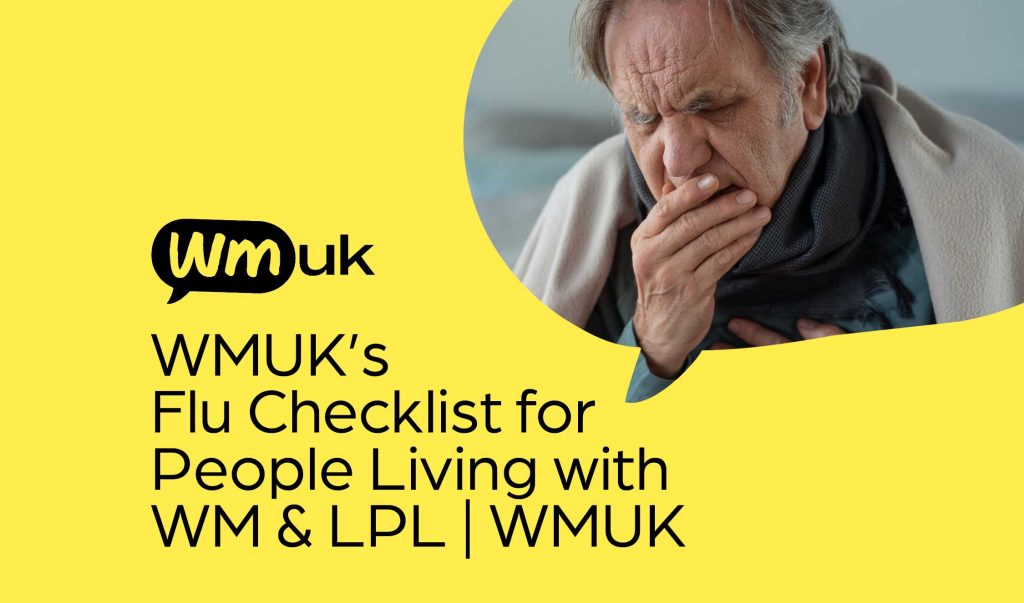
When you’re living with WM and LPL, the thought of catching the flu can be very daunting. It’s good to know the symptoms to look out for and when you need to contact your GP or clinical team. Having a plan in place can help you feel more confident, reduce uncertainty, and ensure you get the right care when you need it.
Step 1: Check your temperature daily
For most adults, a normal temperature is approximately 36.5–37.2 °C. If it increases to 37.5 °C or higher, this could be a sign of an infection. If your temperature rises above 38 °C, contact your GP or clinical team as soon as possible on the same day.
Step 2: Check for COVID-19
Complete a lateral flow test at home if you think you may have COVID-19. If you get a positive result, contact your GP or clinical team, who may put you on antiviral medication.
Step 3: Monitor your symptoms
Most viral respiratory illnesses start to improve within 3–5 days. If your symptoms don’t improve after 5 days – or if they get worse – contact your GP. You may need further tests or antibiotics to fight the infection. Make sure to let your GP know that you have WM or LPL, which compromise your immune system and can slow recovery.
Step 4: Know when to seek urgent help
If you have any of the following symptoms of sepsis, call 999 or attend A&E immediately:
feeling confused, fast breathing or heart rate, a very high or very low temperature, violent shivering, or skin that is mottled, pale, or cold.
If you are in any doubt, always contact your healthcare team.