
Winter can feel long, dark and never ending – often referred to as ‘winter blues’. Experts at the Mind Charity explain that there’s no scientific proof for a single day or month to cause the blues, but it’s completely normal to feel a dip after the festive period. There are lots of small things you can do to help your well-being and mood.
Here are our top 10 tips:
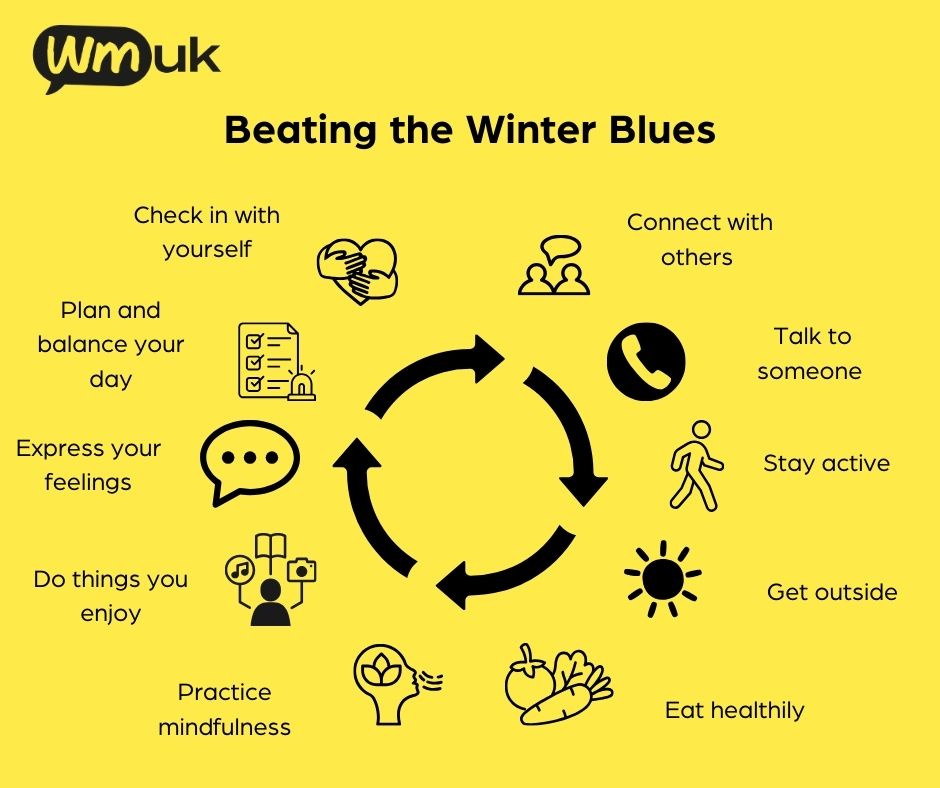
- Connect with others: Whether it’s friends, family or our WMUK support groups, connecting with others (in person or online) is important.
- Talk to someone: Reach out to friends or support
services: 111, Mind, Samaritans, Silverline. - Stay active: Take a walk in daylight or try gentle movements like walking, stretching or yoga at home. You’re welcome to our online yoga and relaxation sessions.
- Get outside: Natural light helps; but if you can’t go out, sit by a bright window.
- Eat healthily: Balance the comfort foods we crave with fruit and vegetables.
- Practice mindfulness: Try meditation, wellbeing apps or podcasts. Take a look at our WMUK webinar on emotional wellbeing.
- Do things you enjoy: Listen to music, sing, dance or doodle to name a few!
- Express your feelings: Emotions can come on suddenly and knock us off balance. Learn to sway with the currents and allow yourself to feel them without judgment.
- Plan and balance your day: Balance activity with rest. Set simple goals and make time for things you enjoy.
- Check in with yourself: Pay attention to your thoughts and feelings and ask yourself what you would like to achieve each day.
Living Alone
We all feel lonely at times – it’s a natural human emotion, and for many people it can be more noticeable in the winter months. We are wired to seek connection, and loneliness is often a signal that we don’t feel as supported as we would like to.
Loneliness is personal to each of us, and there is no right or wrong way to experience it. What matters is recognising it and knowing that support is always available.
The different types of loneliness include:
- Emotional loneliness: When someone you were very close with is no longer there. This could be a partner, family member, close friend or pet.
- Social loneliness: When you feel like you’re lacking a wider social network of friends, neighbours or colleagues.
- Transient loneliness: A feeling that comes and goes.
- Situational loneliness: Loneliness which you feel at certain times, like a specific day of the week, Bank Holidays or Christmas.
- Chronic loneliness: When you feel lonely all or most of the time.
If you are struggling with loneliness, there are small steps you can take that may help, including:
- Seeking support when you need it
- Building connections with loved ones or the WM/LPL community
- Trying new interests or activities
- Taking care of your own well-being
For urgent advice to combat loneliness, the following services offer confidential support:
- NHS 111 Mental Health Triage: Call 111 (option 2) or visit 111 online – available any time of day
- The Lighthouse (Southampton): Text Lighthouse to 07451276010 for local crisis support (4.30pm-11.30pm daily)
- Shout:Text HANTS to 85258 for free, 24/7 text support
WE’RE HERE FOR YOU
WM or LPL can sometimes feel unpredictable or overwhelming, but having access to the right information and support can you help feel empowered and in control.
Whether you need guidance on managing symptoms, practical tips on staying well, or just a little reassurance, WMUK is always here for you.
Support Line
We’re here Monday -Thursday 9am-5pm. You can email support@wmuk.org.uk, call 0300 373 8500, or book a call or Zoom chat online.
Support Groups
We have Regional Support Groups across the UK that meet together online and in person to provide friendship, encouragement and advice. Find your nearest Support Group
Webinars
We run regular online Coffee & Chat sessions as well as relaxation and yoga sessions for anyone impacted by WM and LPL. Take a look at our upcoming events.