
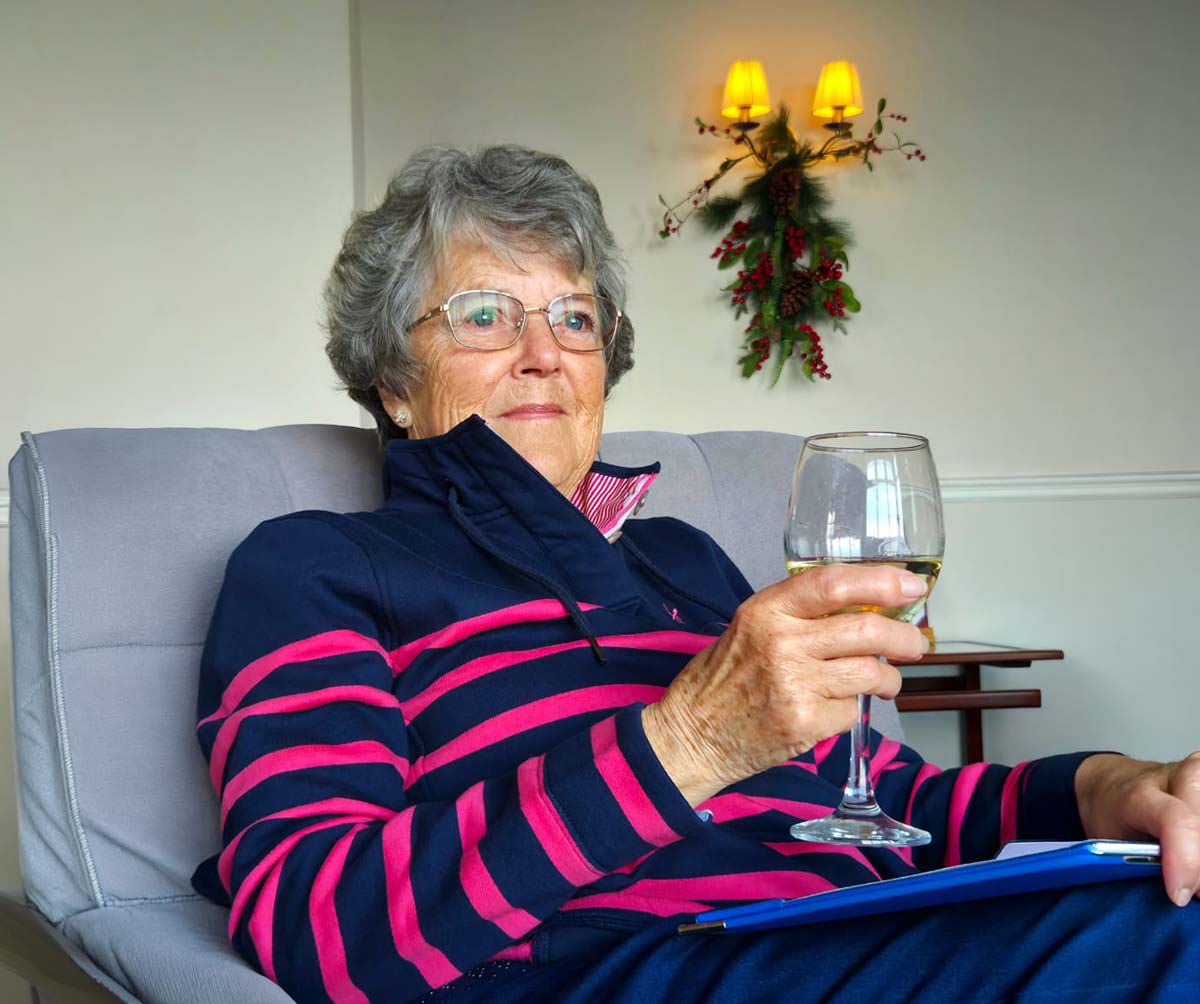

When Carol was diagnosed with Waldenstrom’s macroglobulinaemia (WM), her life changed almost overnight. Looking back, she shares how she learnt to advocate for herself, why knowledge became her greatest source of confidence, and the small moments of joy that helped her through treatment.
Everything changed in two weeks
Five years ago, if you’d asked me about my health, I’d have described myself as “medically boring”. I was fit, active and rarely ill. My husband had been diagnosed with Parkinson’s disease, so if I felt a bit tired, but I simply put it down to looking after him and the stresses of life.
Then, over the space of just a couple of weeks, everything changed.
Looking back, I think your body copes for as long as it can, and then suddenly it says, “No, this isn’t right.” I became completely exhausted. I had discomfort under my ribs, terrible night sweats and eventually I could hardly function.
Within days of going to my GP, I was having blood tests, being told my haemoglobin was dangerously low and needing blood transfusions.
Doctors initially thought I might have myeloma, before eventually diagnosing Waldenstrom’s macroglobulinaemia after a bone marrow biopsy.
The consultant told me there wasn’t a cure, but that it could be treated and that I could still live a normal life.
It all happened so quickly that it felt as though I’d been picked up and dropped into somebody else’s life.
The hardest part wasn’t what I expected
Treatment started almost immediately. I was grateful something could be done, but I wasn’t prepared for just how difficult chemotherapy would be.
Every cycle followed the same pattern. The first couple of days I’d think, “I’m getting away with this.” Then the nausea would hit. I couldn’t eat. I could barely drink water. By the end, I felt absolutely broken.
The hardest part wasn’t just the sickness or the neuropathy in my feet. It was the effect on my brain.
I’d always been the person who remembered birthdays, organised everything and knew where everything was. Then one day I sat down to do an online supermarket shop and couldn’t even remember my password. It took me two hours to place an order that would normally have taken twenty minutes.
That frightened me more than almost anything else.
I learnt to trust my instincts
Knowledge gave me confidence
When I was diagnosed, I was given lots of information about chemotherapy, but very little about WM itself. Finding WMUK changed that.
I discovered the charity almost by accident when I spotted its name on the back page of a lymphoma booklet. From then on, everything started to make more sense. Suddenly I could understand why I had neuropathy, what my blood results meant and what questions I should be asking.
I watched every webinar I could find. Then I watched them again. I just wanted the knowledge.
Over time, I realised something important: nobody is going to know my body better than I do.
When my symptoms started returning a couple of years later, I could see my blood results changing. Although some were still “within range”, I knew they weren’t normal for me. I trusted my instincts and kept asking questions until I eventually started a new treatment.
Don’t be afraid to ask questions
Living with WM has taught me that you have to become part of your own healthcare team. Keep your blood results. Keep your notes. Learn about your condition from trusted sources. Ask questions if you don’t understand something, and don’t be afraid to ask them again.
I know not everyone feels confident doing that, but this is your life and your health.
Most importantly, be kind to yourself.
Recovery takes time, and it’s easy to expect too much. If there’s something you don’t have the energy to do today, it can wait until tomorrow. Instead, find something that brings you joy, however small. Make yourself a cup of coffee. Sit in the sunshine. Practise a little yoga or simply take a few deep breaths.
Living with WM has taught me many things, but perhaps the biggest lesson is this: trust yourself, keep learning, and always look for the pleasant things.
They matter more than you realise.